Tucked into the heart of East Africa, Uganda is landlocked yet suprisingly shaped by water. It is home to Lake Victoria, the largest freshwater lake in the world by surface area. From its northern edge flows the River Nile, beginning its epic journey to the Mediterranean at the very source, first traced here by early explorers.
Often called the primate capital of the world, Uganda shelters one of the greatest concentrations of primates on Earth, including endangered mountain gorillas and highly social chimpanzees.
Uganda’s natural and cultural significance is recognised globally through three UNESCO World Heritage Sites:
The country protects its biodiversity through 10 national parks and 12 wildlife reserves, spanning savannah, rainforest, wetlands, alpine zones, and vast freshwater ecosystems. Few places on the continent offer such ecological range within a single border.
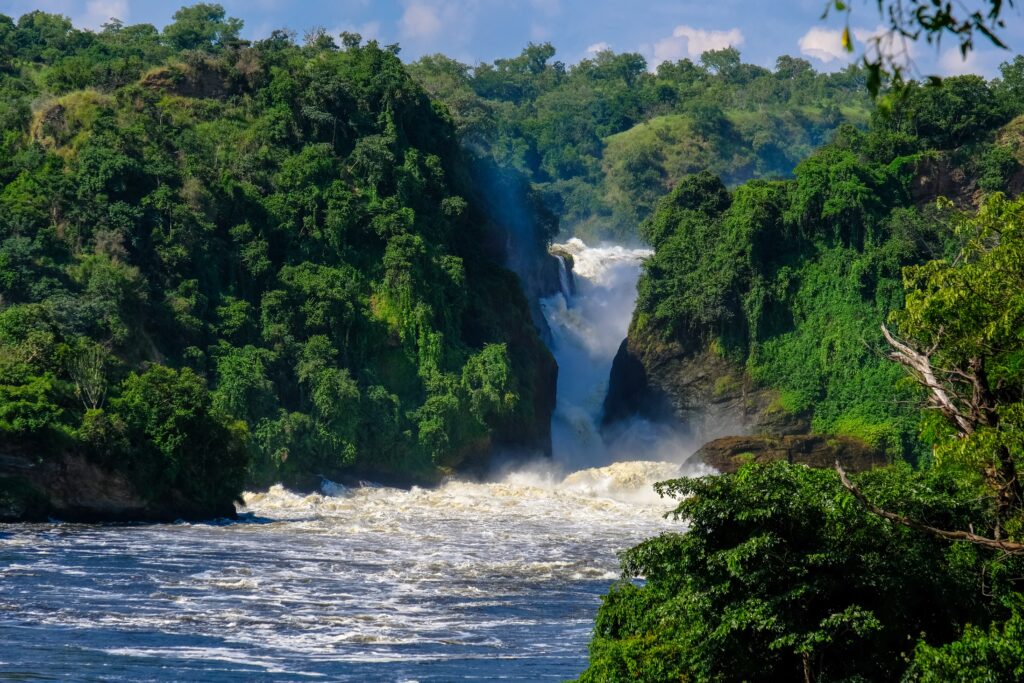
Uganda is also home to the world’s most powerful waterfall, Murchison Falls. This is where the Nile is forced through a narrow rock cleft before exploding into thunder and mist. It is a spectacle that captures Uganda’s essence: forceful, beautiful and alive.
Experiences
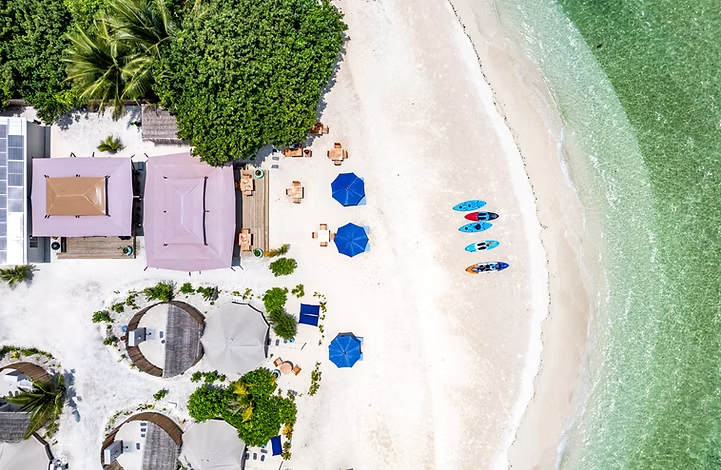
Kayaking on Lake Victoria offers an intimate way to explore sheltered bays, island communities and bird-rich shorelines.
In the west, guided treks through the fertile foothills and cloud forests of the volcanic landscapes of the Virunga region, reveal dramatic views across borders and time-shaped terrain.
Birding in Uganda is exceptional. With over 1,000 recorded species, representing nearly 12 percent of the world’s birdlife, the country is a pilgrimage site for ornithologists and casual observers alike. From papyrus endemics in wetlands to rare forest species, diversity is constant and astonishing.
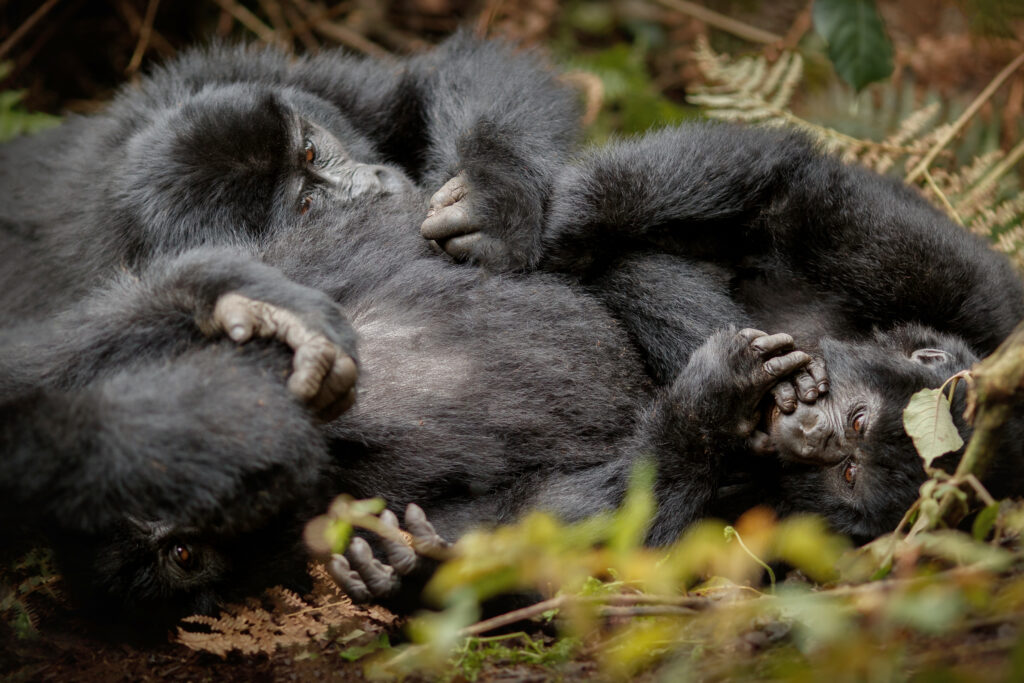
Primate encounters are among Uganda’s most powerful experiences. Chimpanzee tracking offers dynamic, vocal forest encounters. Mountain gorilla safaris in ancient rainforest remain one of the most moving wildlife experiences anywhere on Earth. These are carefully regulated, conservation-led encounters that prioritise respect and sustainability.
Cultural experiences add depth and context to the journey. Visitors may explore the traditions of the Buganda Kingdom, engage with Batwa forest communities near Bwindi, learn traditional bark cloth making, or visit rural homesteads. Music, dance, storytelling and cuisine provide windows into Uganda’s living heritage.
Destinations
- Entebbe
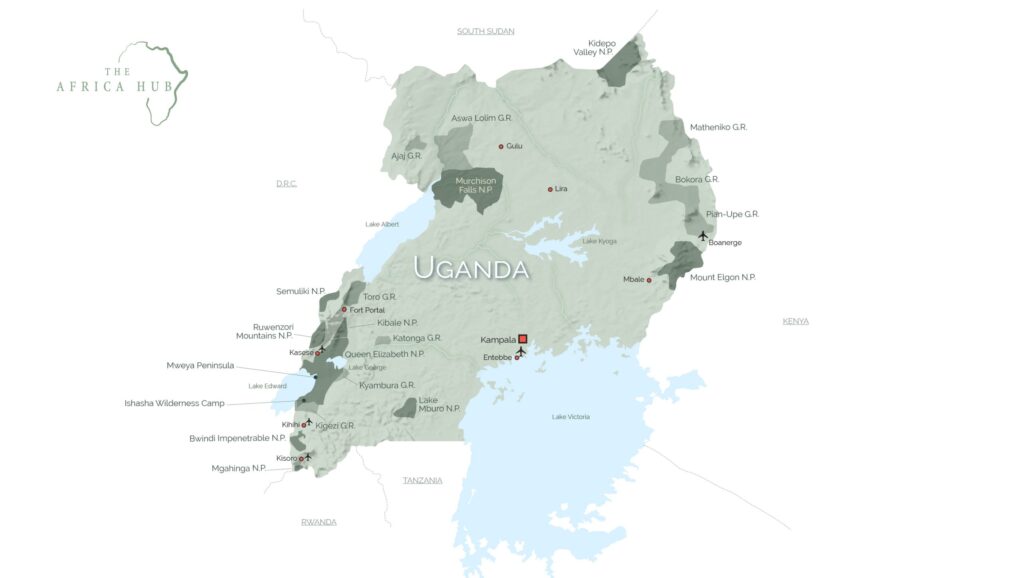
Uganda’s international gateway, Entebbe is a calm lakeside town set along the shores of Lake Victoria. Botanical gardens, quiet beaches, and cooling lake breezes make it an ideal place to begin or gently conclude a journey. - Kampala
Spread across a series of hills, Uganda’s capital is the cultural and political heart of the country. Visitors can explore Buganda royal heritage, including palace sites and traditional architecture, gaining insight into one of East Africa’s most influential kingdoms. - Kibale Forest National Park
Renowned for chimpanzee tracking, Kibale is one of Africa’s most important primate habitats, offering immersive forest walks and exceptional biodiversity. - Bwindi Impenetrable Forest
A UNESCO World Heritage Site and home to mountain gorillas, Bwindi is an ancient rainforest known for deeply moving, conservation-led gorilla trekking experiences. - Queen Elizabeth National Park
A diverse savannah landscape of crater lakes, open plains, and waterways. This area is famous for tree-climbing lions and boat safaris along the Kazinga Channel. - Murchison Falls National Park
Where the Nile forces its way through a narrow gorge before plunging into thunderous falls, combining dramatic scenery with classic wildlife viewing. - Rwenzori Mountains
Known as the Mountains of the Moon, the Rwenzori offer alpine trekking, glaciers, and rare high-altitude flora for adventurous travellers. - Lake Bunyonyi
A tranquil highland lake surrounded by terraced hills, ideal for rest, reflection, and gentle canoeing after forest and safari adventures.
When to Travel
Uganda is a year-round destination, though timing enhances specific experiences.
The drier seasons, from January to February and June to September, are generally best for gorilla and chimpanzee trekking, wildlife safaris and hiking. Trails are easier to navigate and wildlife tends to concentrate around water sources.
The greener seasons, from March to May and October to November, bring heavier rainfall but also fewer visitors, lush landscapes, and excellent birding. These months appeal to travellers seeking quieter experiences and dramatic scenery.
There are few times to entirely avoid Uganda. Even during the wettest months, rain often falls in short, intense bursts rather than continuously. With thoughtful planning and flexibility, every season reveals a different facet of the Pearl of Africa.
Ready to Explore Uganda?
Uganda offers an extraordinary range of experiences, from primate encounters and wildlife safaris to living heritage and water-shaped landscapes. Bringing these elements together in a way that feels seamless and personal is where thoughtful travel design matters the most. If you are considering a journey to Uganda, please get in touch and lets shape an itinerary that reflects your personal interests and travel style.