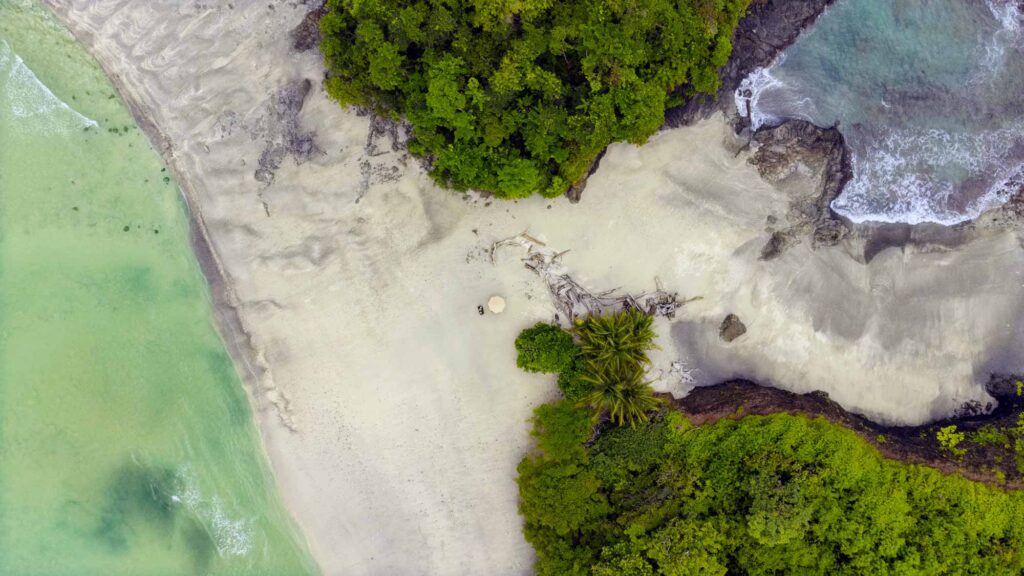
Floating twenty miles off Panama’s Pacific coast in the Gulf of Chiriquí, Islas Secas is an archipelago of fourteen volcanic islands. Thirteen of them remain entirely untouched. The fourteenth holds one of the most consciously designed retreats I have ever encountered. This is a place where solar panels power everything, where the marine life outnumbers the guests and more importantly where the word “sustainable” is not a marketing afterthought but a founding principle.
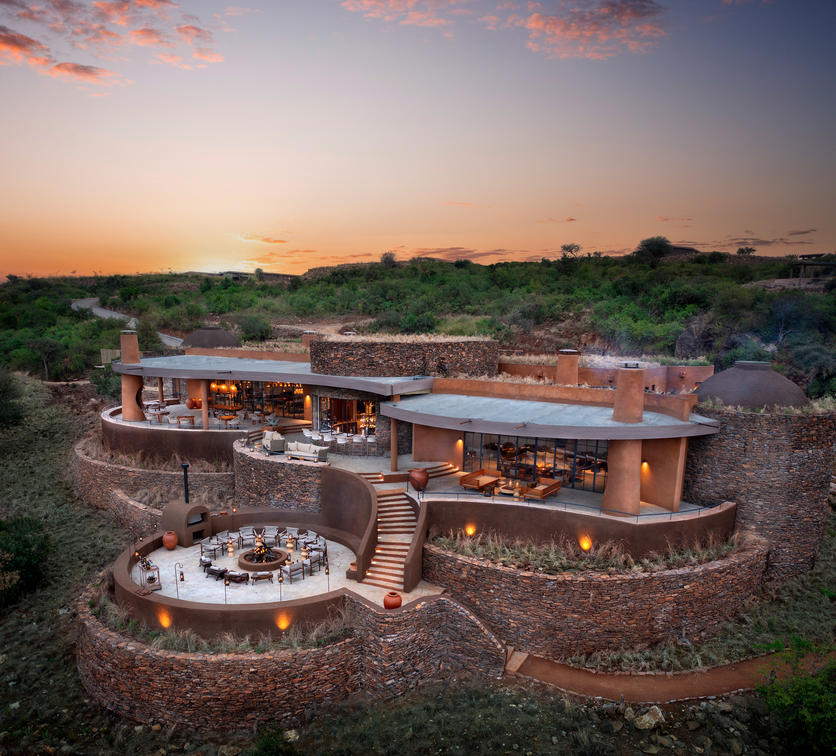
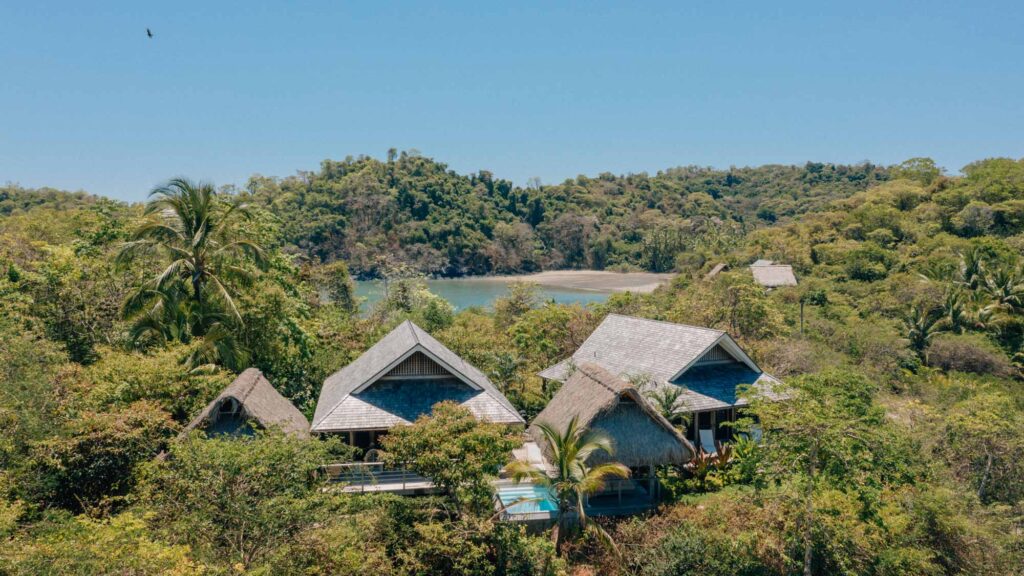
Voted the number one resort in Central America by Condé Nast Traveller, Islas Secas accommodates a maximum of just twenty-four guests across seven individually designed casitas. No two are alike. Each one opens to the ocean and disappears into the jungle. The tented casitas roll their walls right back onto the terrace and each has a private plunge pool. Casa Cavada is the newest and most extraordinary addition; a clifftop four-bedroom residence built from sustainable eucalyptus pillars rising from natural rock. It is, in a word, extraordinary.
Islas Secas is owned by an avid conservationist and the intention permeates every corner of the property. The resort runs entirely on solar energy. Food waste is fully composted and recycled. Treated wastewater is returned safely to irrigate the island’s native plants. Construction was designed from the outset to preserve indigenous species and minimise disruption to the incredible landscape.
The Archipelago Stewardship Sustainability Conservation Foundation funds initiatives to protect the Gulf of Chiriquí which is home to twenty-five percent of Panama’s mangroves. Through partnerships with organisations including the Smithsonian Tropical Research Institute, the Foundation supports coral reef research, bird population studies, the removal of abandoned fishing nets and cataloguing of species across the archipelago. When you stay here, your visit directly contributes to this work.
Beny, the resort’s conservation and sustainability manager, leads marine safaris around the archipelago and has a near encyclopaedic knowledge of every reef, frigate bird colony and whale migration pattern in the Gulf. He is the kind of guide who makes you see the ocean differently and feel just how much it is worth protecting.
An hour’s boat ride from Islas Secas lies Coiba National Park, a UNESCO World Heritage Site that many travellers to Panama never hear about let alone reach. It contains the second-largest coral reef in the eastern Pacific, primary rainforest that rivals anything in Costa Rica and marine biodiversity that simply has to be seen to be believed.
The Gulf’s nutrient-rich waters are also the only known place on the planet where both northern and southern hemisphere humpback whale populations come to winter meaning a remarkable overlap that means whale sightings are virtually guaranteed between July and October.
Above the waterline, over one hundred species of birds inhabit the archipelago, including Panama’s second-largest frigate bird colony on Isla Coco, where researchers recently recorded the highest number of chicks since monitoring began. Brown boobies, blue-footed boobies and peregrine falcons share the cliffs. Manta rays drift through the twenty dive sites. Dolphins are a common sight on the crossing from the mainland.
The Conscious Credentials
100% Solar Power : The resort runs entirely on solar energy – no generators, no fossil fuels. One of very few properties of this calibre to achieve full renewable operation.
Marine Conservation : Partnerships with the Smithsonian Tropical Research Institute fund active coral reef protection, species cataloguing and abandoned net removal across the archipelago.
Zero Waste Systems : Full composting and recycling of all food waste. Treated wastewater is reused for irrigation, protecting the island’s freshwater table.
Ethical Wildlife Encounters : All whale watching, birding and marine activities follow strict non-disturbance protocols. The catch-and-release fishing programme is fully ethical.
Community Partnerships : The resort works with the Chiriquí community and supports sustainable fishing practices that protect livelihoods alongside ecosystems.
13 Islands Untouched : Of fourteen islands in the archipelago, thirteen remain completely wild. Development is confined to a single island, with a deliberately light footprint.
The Essential Info
Getting there : Fly into Panama City (PTY), then connect to David (DAV) for a one-hour domestic flight. The resort arranges a private transfer to Boca Chica marina and a 45-minute boat transfer.
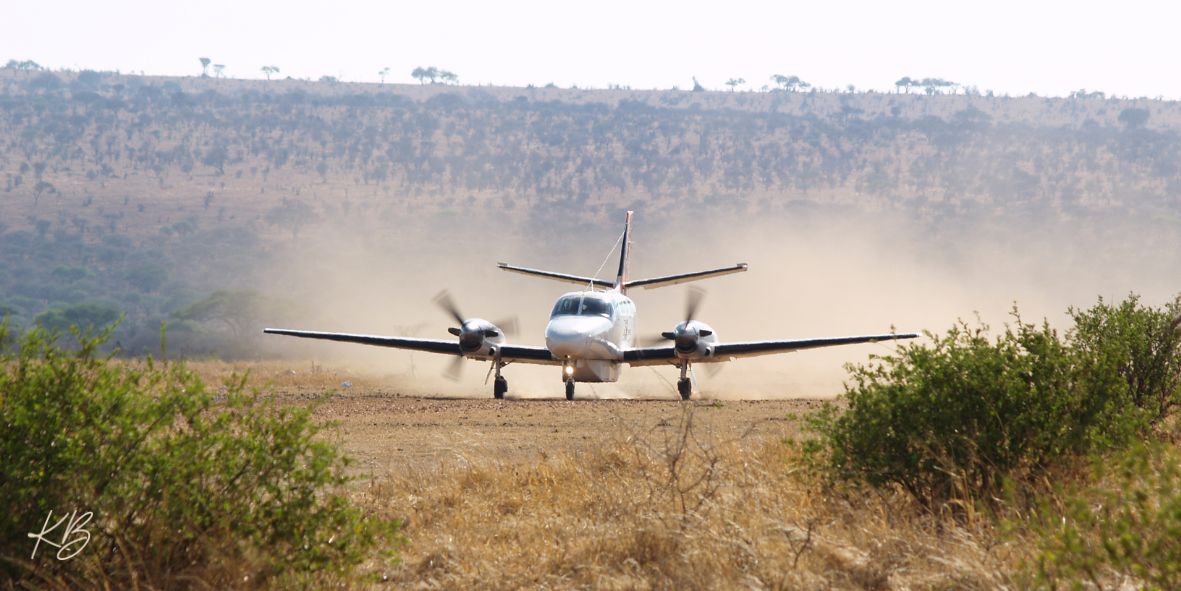
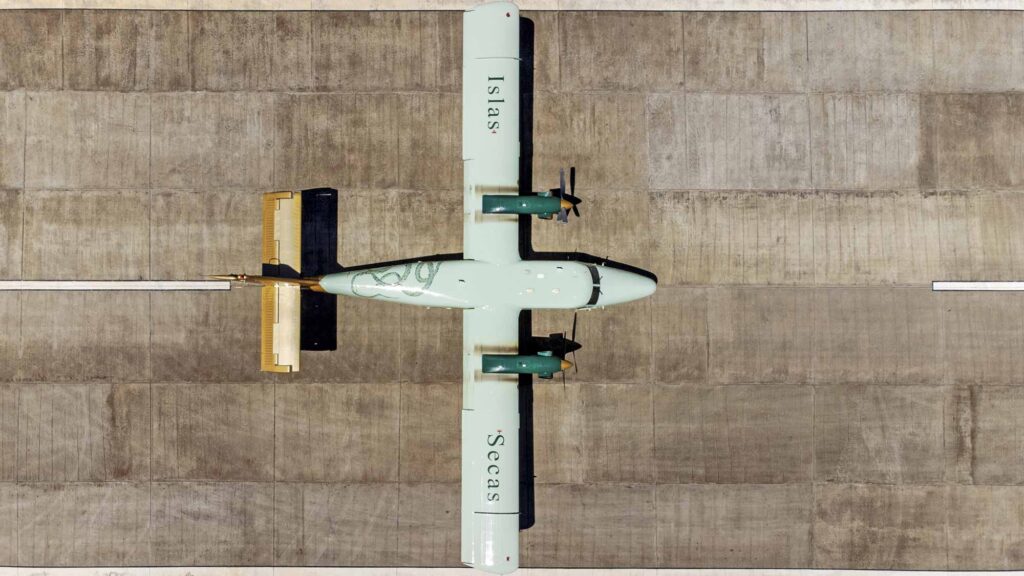
Alternatively and even more luxurious, a private Twin Otter flies direct from Panama City a few times per week.
Best time to visit : December to April for the clearest diving conditions or July to October for humpback whale season (the resort considers sightings virtually guaranteed during this window). Year-round for birding and marine safaris.
Accommodation : Seven casitas sleep two to eight guests across a range of configurations, from the romantic one-bedroom Casita Mirador to the clifftop four-bedroom Casa Cavada. All-inclusive rates cover meals, most activities (including diving) and one spa treatment per guest.
What to pack : Lightweight, casual clothing. Reef-safe sunscreen only – this is a protected marine area. A good hat and water shoes. The dress code is barefoot-chic throughout.
The Perfect Itinerary
An itinerary on my own wish-list is to pair this with an eco lodge or two in Costa Rica, for the perfect combination of forest and ocean exploration.
With British Airways increasing its flight options from London Heathrow to San Jose from October this becomes even easier. The timing from October to March combines the perfection of the dry season in Costa Rica with the best diving conditions in Panama.
My prefect trip would look something like this…
Arrive on your overnight flight into San Jose and be met by your driver for a private transfer. The drive from San José to La Fortuna takes you north through the Central Valley and into the volcanic highlands, past working farms, roadside fruit stalls until you spot the unmistakable cone of Arenal Volcano emerging from cloud.
Stay for 4 nights at Nayara Gardens set within the national park with views of the volcano from all angles. Join guided Sloth tours, dawn birdwatching walks, hike the volcano and relax in the hot springs before indulging in spa treatments using the local volcanic mud and coffee products.
Transfer to El Silencio Lodge in Bajo del Toro for the next 3 nights.
This 500 acre estate holds the highest eco-credentials within Costa Rica and every guest is invited to plant a tree in the lodges carbon offsetting forest program. Hike waterfalls and cloud forests when you are not marvelling at the estates two incredible projects – a hummingbird garden and a Meliponary, housing the regions stingless bee which has been providing medicinal honey to the local communities for centuries. Make the most of your stay with a visit to an active volcano, joining yoga classes on the outside deck or learn how to make the perfect tortilla with a local family before your transfer back to San Jose airport for your short direct flight to Panama City.
If you time it right you can take Isla Secas small plane directly to the resort, meaning you can be from cloud forest to ocean in no time at all.
A 5 night stay is perfect if you’re planning to dive and makes this a perfect 14 night itinerary with lots of options for return flights to Heathrow too.
So get in touch for more info on this or to hear my other ideas for an epic itinerary in Islas Secas